
Schilderijen en sculpturen te Rome
1608 - 1611
Medium
engraving
Dimensions
76; 115
Rights
Public Domain
About this artwork
verzamelaarsmerk, verso linksonder, gestempeld: Lugt 240
Art Historical Context
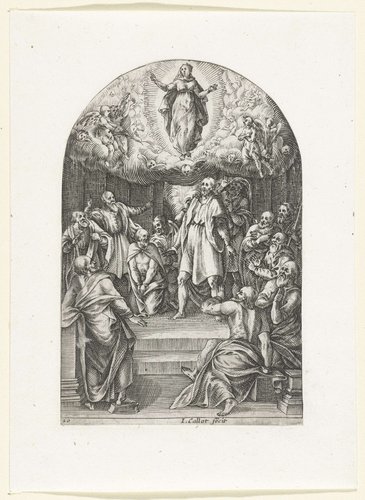
**Schilderijen enuren te Rome** is an exquisite small-scale engraving by Jacques Callot created between 1608 and 1611 during the artist's formative years in Italy. Measuring just 115 mm high by 76 mm wide, this intimate print captures the vibrant world of Roman art collections, showcasing paintings and sculptures in a gallery-like setting. Callot, a pioneering French Baroque printmaker renowned for his intricate etchings and engravings, honed his skills in Florence and Rome early in his career, drawing inspiration from the grandeur of Italian Renaissance treasures. Engraved with remarkable precision, the work exemplifies Callot's mastery of fine lines and dense detail, techniques that allowed him to evoke depth and texture on a miniature scale. This period marked his transition from painting to printmaking, influenced by masters like Antonio Tempesta, and reflects the 17th-century fascination with *Wunderkammern*—cabinets of curiosities filled with art and antiquities. Visitors would have prized such prints as portable souvenirs of Rome's cultural riches. On the verso, lower left, bears the stamped collector's mark Lugt 240, a testament to its esteemed provenance among European connoisseurs. This rare survival invites us to imagine 17th-century travelers poring over Callot's visions, bridging the Eternal City's past with our own appreciation for printmaking's enduring artistry.
About the Artist
Jacques Callot · 1592–1635
Jacques Callot (1592–1635) was a French printmaker and draftsman from the Duchy of Lorraine, widely regarded as one of the first great artists to practice the graphic arts exclusively. His more than 1,400 etchings chronicled the breadth of 17th-century life, from Medici court festivities to the brutal realities of warfare. Callot revolutionized etching through technical innovations including the é...