
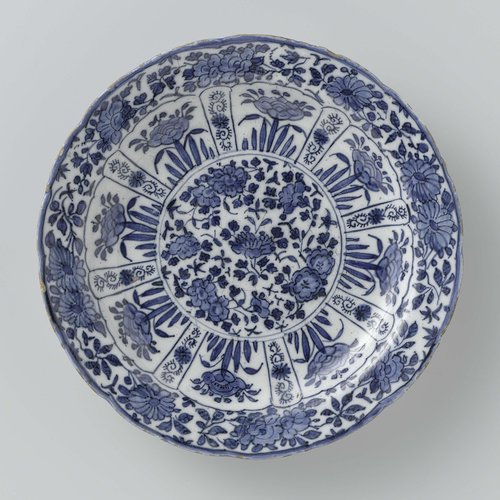
Schotel van faïence
ca. 1690 - ca. 1700
Medium
platter
Dimensions
12.5
Rights
Public Domain
About this artwork
Gift of the heirs of J.F. Loudon, The Hague
Art Historical Context
Behold the delicate *Schotel van faïence*, a tin-glazed earthenware platter crafted by the renowned De Grieksche A pottery workshop in Delft, Netherlands, around 1690–1700. Measuring just 12.5 cm in diameter, this petite dish exemplifies the exquisite everyday luxury of Dutch Delftware during the Golden Age. Produced at a time when the Dutch East India Company flooded markets with Chinese porcelain imports, Delft artisans like those at De Grieksche A mastered faience—a glossy, white tin-glazed earthenware—to offer affordable, high-quality alternatives. The tin-glazing technique was revolutionary: a layer of tin oxide opacified the clay body, creating a smooth, porcelain-like surface ideal for vibrant painted decorations in blues, whites, and polychrome hues. De Grieksche A, named "Greek A" after its street location, was a leading factory known for its precise, export-quality pieces that graced tabletops across Europe and beyond. This platter likely served as a small tazza or condiment dish, blending functionality with artistry. Generously gifted by the heirs of J.F. Loudon from The Hague, it whispers of 17th-century prosperity and the ingenuity of Dutch craftsmanship. A charming survivor of its era, it invites us to savor the intersection of trade, innovation, and beauty in everyday objects.