
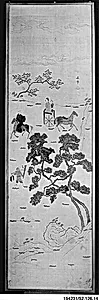
Screen Panel from Set of Six
Unknown Artist
late 18th–early 19th century
Medium
Silk; on silk
Dimensions
76 3/4 x 22 1/4 in. (194.94 x 56.52 cm)
Classification
Textiles-Embroidered
Culture & Period
China · Qing dynasty (1644–1911)
Department
Asian Art
Museum
Metropolitan Museum of Art, New York, NY
Credit
Gift of the Estate of Mrs. Edward Robinson, 1952
Accession Number
52.126.14
Rights
Public Domain
Tags
Art Historical Context
This exquisite screen panel, part of a rare set of six from China's Qing dynasty (late 18th–early 19th century), showcases the pinnacle of imperial-era textile artistry. Crafted from silk embroidered on silk, it measures an impressive 76 3/4 x 22 1/4 inches, designed to form a grand folding screen that divided and adorned elite interiors. The motifs of trees and carts evoke serene landscapes, likely depicting rural processions or seasonal travels, rendered with meticulous detail that highlights the era's reverence for nature and daily life. Qing embroidery masters employed sophisticated techniques like satin stitch and Peking knot, achieving luminous depth and texture on the luxurious silk ground. These screens were more than decor—they symbolized wealth and refinement, often commissioned for scholarly pavilions or bridal chambers. As a cultural artifact, it reflects the dynasty's cosmopolitan flourishing, blending traditional motifs with exquisite craftsmanship amid growing trade influences. Now at the Metropolitan Museum of Art (gift of the Estate of Mrs. Edward Robinson, 1952), this panel invites visitors to appreciate the tactile splendor of Chinese textiles, where every thread tells a story of artistry and heritage.