
Screw-top jar
Unknown Artist
probably 19th century
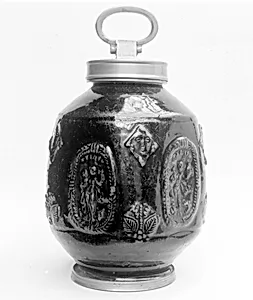
Medium
Salt-glazed stoneware
Dimensions
Height: 8 1/4 in. (21 cm)
Classification
Ceramics-Pottery
Culture
German, Saxony
Department
European Sculpture and Decorative Arts
Museum
Metropolitan Museum of Art, New York, NY
Credit
Gift of Mrs. Robert W. de Forest, 1920
Accession Number
20.62.2a, b
Rights
Public Domain
Art Historical Context
This charming screw-top jar, hailing from Saxony, Germany, and likely dating to the 19th century, exemplifies the region's renowned tradition of utilitarian ceramics. Standing at 8¼ inches (21 cm) tall, this modest vessel was designed for practical storage—perhaps for preserves, spices, or dry goods—its innovative screw-top lid ensuring an airtight seal that was advanced for its time. Now housed in the Metropolitan Museum of Art's Department of European Sculpture and Decorative Arts, it entered the collection as a gift from Mrs. Robert W. de Forest in 1920, highlighting early 20th-century enthusiasm for everyday European craftsmanship. Crafted from salt-glazed stoneware, the jar showcases a glazing technique perfected in German potteries since the 17th century. In this method, salt is introduced into the kiln during firing, vaporizing to create a durable, glossy surface resistant to liquids and wear—ideal for household use. Saxony's potters, centered in areas like Meissen, elevated stoneware from mere functionality to objects of subtle beauty, often with clean lines and earthy tones that reflect industrial-era efficiency. Though by an unknown artist, this jar captures the cultural shift toward mass-produced yet finely made domestic wares in 19th-century Europe, bridging utility and artistry. It's a delightful reminder of how ordinary items once graced Saxon kitchens, preserving flavors and histories alike.