
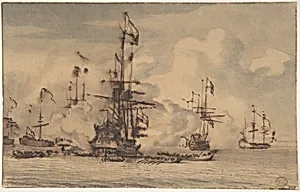
Sea Fight
mid-17th–early 18th century
Medium
Pen and brush and brown and gray ink; traces of a framing line in black chalk
Dimensions
sheet: 7 x 11 1/8 in. (17.8 x 28.3 cm)
Classification
Drawings
Department
Drawings and Prints
Museum
Metropolitan Museum of Art, New York, NY
Credit
Rogers Fund, 1906
Accession Number
06.1051.12
Rights
Public Domain
Tags
About this artwork
This pen and brush and brown and gray ink; traces of a framing line in black chalk by Willem van de Velde II from mid-17th–early 18th century represents the artistic and cultural achievements of its period. Printmaking during this era served multiple functions, providing affordable art for collectors, documenting contemporary life, and demonstrating technical virtuosity. The medium allowed wide distribution, making visual culture accessible beyond elite patronage. This example showcases period c...
Art Historical Context
Willem van de Velde II’s “Sea Fight” offers a vivid glimpse into the turbulent maritime world of the mid-17th to early 18th century. Created with pen and brush in brown and gray ink on a modest sheet measuring just 7 by 11 inches, the drawing depicts intense naval combat between ships. Van de Velde, a leading Dutch marine artist, specialized in such dynamic scenes, using delicate linework and subtle washes to convey the chaos of battle, billowing sails, and churning waters. The medium itself highlights the artist’s technical skill. Brown and gray inks allowed for precise details in rigging and figures while also suggesting depth and atmosphere through layered tones. Traces of a black-chalk framing line indicate the work may have been intended for presentation or further development. These intimate drawings often served as studies or records of contemporary naval events, preserving the era’s fascination with sea power and exploration. Today, this piece invites modern viewers to appreciate both the drama of historical battles and the enduring artistry of marine subjects. Acquired by the Metropolitan Museum in 1906, it remains a compelling example of how drawings can capture fleeting moments of conflict with remarkable clarity and elegance.