
Seal
Unknown Artist
Medium
Jade
Dimensions
H. 4 in. (10.2 cm); W. 4 in. (10.2 cm)
Classification
Seals
Culture & Period
China · Song dynasty (960–1279)
Department
Asian Art
Museum
Metropolitan Museum of Art, New York, NY
Credit
Rogers Fund, 1919
Accession Number
19.19.19
Rights
Public Domain
Art Historical Context
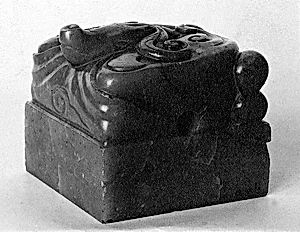
This exquisite jade seal from China's Song dynasty (960–9) exemplifies the era's masterful craftsmanship and cultural sophistication. Carved from lustrous jade—a material revered for its purity, durability, and symbolic ties to imperial virtue—the square seal measures a substantial 4 x 4 inches (10.2 x 10.2 cm). Though the artist remains unknown and the precise date unrecorded, its form aligns with Song-period seals used by scholars, officials, and collectors to authenticate documents, artworks, and personal correspondence. In Song China, a golden age of neo-Confucian scholarship and artistic refinement, seals were more than functional tools; they were miniature sculptures embodying status and aesthetics. Intricately carved with raised or incised characters on the base (typically read in relief when stamped in vermilion ink), these objects bridged bureaucracy and artistry. Jade's cool translucence and fine grain allowed for precise detailing, showcasing lapidary techniques honed over centuries. Acquired through the Rogers Fund in 1919 and housed in the Metropolitan Museum of Art's Asian Art Department, this seal invites us to ponder the lives of its long-ago owners—perhaps a poet sealing a scroll or an administrator marking edicts. It stands as a tactile link to a dynasty that prized elegance in everyday elegance.