
Seal
Unknown Artist
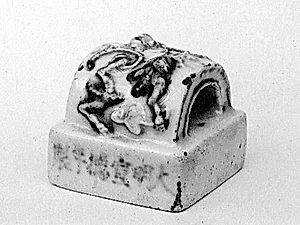
Medium
Porcelain
Dimensions
H. 1 3/16 in. (3 cm); W. 1 3/16 in. (3 cm); L. 1 1/16 in. (2.7 cm)
Classification
Seals
Culture & Period
China · Ming dynasty (1368–1644), Xuande period (1426–35)
Department
Asian Art
Museum
Metropolitan Museum of Art, New York, NY
Credit
Gift of Yamanaka and Co., 1919
Accession Number
19.168
Rights
Public Domain
Art Historical Context
This exquisite porcelain seal, crafted during China's Ming dynasty in the Xuande period (6–35), exemplifies the era's mastery of fine ceramics. Measuring just over an inch in each dimension, its compact form belies its importance as an official tool for authentication. Produced likely at the imperial kilns of Jingdezhen, the heart of porcelain innovation, such seals were essential in imperial bureaucracy, pressed into vermilion ink to validate documents, artworks, and decrees. The Xuande reign marked a golden age for Chinese porcelain, renowned for its purity, translucency, and technical perfection—qualities that elevated it to a symbol of imperial prestige and global trade. Though the artist remains unknown, the seal's survival highlights the durability of porcelain despite its fragility. Seals like this bridged art and administration, embodying Confucian ideals of order and legitimacy. Today, this rare artifact graces the Metropolitan Museum of Art's Asian Art collection, a 1919 gift from Yamanaka and Co., early 20th-century dealers who bridged East and West. It invites us to ponder the intricate lives of everyday imperial objects that shaped a dynasty.