
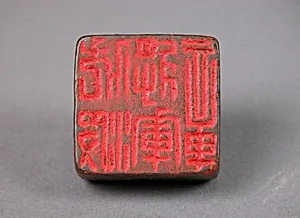
伏波將軍章|Seal
Unknown Artist
Medium
Bronze
Dimensions
H. 1 1/16 in. (2.7 cm); W. 1 1/16 in. (2.7 cm); D. 7/8 in. (2.2 cm)
Classification
Metalwork
Culture & Period
China · Ming dynasty (1368–1644) or earlier
Department
Asian Art
Museum
Metropolitan Museum of Art, New York, NY
Credit
Gift of Edward B. Bruce, 1924
Accession Number
24.13.44
Rights
Public Domain
Art Historical Context
This exquisite bronze seal, titled *Fubo Jiangjun Zhang* ("Seal of General Fubo"), hails from China and dates to the Ming dynasty (1368–1644) or earlier. Measuring just over 1 inch square and nearly an inch deep, its petite scale belies its potent historical resonance. Crafted in bronze—a durable medium favored for its longevity and prestige in Chinese metalwork—the seal features a carved intaglio face, typical for imprinting red ink paste onto documents or artworks to authenticate ownership or authority. The title invokes Ma Yuan, the revered Han dynasty general (14 BCE–49 CE) known as "Fubo" for his campaigns pacifying southern frontiers, earning him legendary status as a symbol of martial valor and loyalty. Such seals were essential tools in imperial bureaucracy, personal correspondence, and artistic connoisseurship, often passed down as heirlooms or commissioned to evoke heroic lineages. This example, a gift to the Metropolitan Museum of Art in 1924, exemplifies the refined casting techniques of Chinese bronzework, where intricate reliefs and patina develop over centuries. In Chinese culture, seals transcend mere utility, embodying identity and continuity. Visitors to the Asian Art galleries can appreciate how this unassuming object bridges ancient heroism with Ming-era artistry, offering a tangible link to China's storied past.