
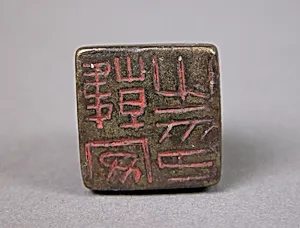
韓安之印|Seal
Unknown Artist
Medium
Bronze
Dimensions
H. 11/16 in. (1.7 cm); W. 11/16 in. (1.7 cm); D. 5/8 in. (1.6 cm)
Classification
Metalwork
Culture & Period
China · Ming dynasty (1368–1644) or earlier
Department
Asian Art
Museum
Metropolitan Museum of Art, New York, NY
Credit
Gift of Edward B. Bruce, 1924
Accession Number
24.13.54
Rights
Public Domain
Art Historical Context
This petite bronze seal, inscribed with "韓安之印" (Seal of Han Anzhi), the refined metalwork of Chinese tradition from the Ming dynasty (8–1644) or earlier. Measuring just 11/16 inches square and 5/8 inches deep, its compact form belies its practical power: seals like this were essential tools for authentication, pressed into clay, wax, or ink to validate official documents, artworks, personal correspondence. Crafted by an unknown artist, it entered the Metropolitan Museum of Art's Asian Art collection in 1924 as a gift from Edward B. Bruce. Bronze, a durable alloy prized in China since antiquity, was cast using lost-wax techniques, allowing intricate relief carving of the characters on the seal's face. These inscriptions often featured elegant calligraphy, blending artistry with function—Han Anzhi's name suggests it belonged to a scholar-official, a class central to Ming bureaucracy and cultural life. Seals bridged administrative and aesthetic realms, evolving from imperial edicts in the Han dynasty to personal stamps on poetry and paintings. Today, this unassuming object whispers of China's long seal-making heritage, where even tiny metalworks carried the weight of identity and authority, inviting us to ponder the lives they stamped into history.