
Seal
Unknown Artist
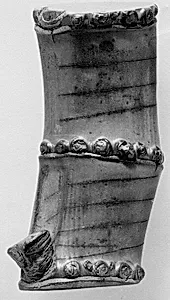
Medium
Bamboo
Dimensions
H. 3 in. (7.6 cm); W. 1 1/2 in. (3.8 cm); D. 1 1/8 in. (2.9 cm)
Classification
Seals
Culture & Period
China · Qing dynasty (1644–1911), Qianlong period (1736–95)
Department
Asian Art
Museum
Metropolitan Museum of Art, New York, NY
Credit
Gift of A. W. Bahr, 1958
Accession Number
58.64.17
Rights
Public Domain
Art Historical Context
This exquisite bamboo seal, crafted during the Qianlong period (1736–95) of China's Qing dynasty, exemplifies the refined artistry of imperial-era scholar's objects. Measuring just 3 inches high, its compact form—carved from a single piece of bamboo—suggests it was designed for personal use, perhaps by a literati official or collector. Bamboo, prized for its lightweight durability and subtle grain, was a favored medium among Qing artisans, allowing for intricate low-relief carving that highlighted the natural texture while ensuring functionality. In Chinese culture, seals like this served as authoritative signatures, pressed into vermilion ink to authenticate documents, paintings, or artworks—far more than mere stamps, they embodied identity and prestige. The Qianlong era, under Emperor Qianlong's patronage, marked a pinnacle of Qing artistic production, blending Confucian scholarship with technical virtuosity. Though the artist's identity remains unknown, the seal's survival reflects the era's emphasis on elegant, everyday luxuries. Today, gifted to the Metropolitan Museum of Art by A. W. Bahr in 1958, this unassuming treasure invites us to appreciate the understated elegance of Chinese craftsmanship, where even a small object carries centuries of cultural weight.