
Seal for Jar
Unknown Artist
6th–7th century
Medium
Clay
Dimensions
D. 1 1/8 in. (2.9 cm) Diam. 3 3/4 in. (9.5 cm) Wt. 4.1 oz. (116.246 g)
Classification
Seals
Department
Islamic Art
Museum
Metropolitan Museum of Art, New York, NY
Credit
Gift of Egypt Exploration Fund, 1905
Accession Number
05.4.202
Rights
Public Domain
Art Historical Context
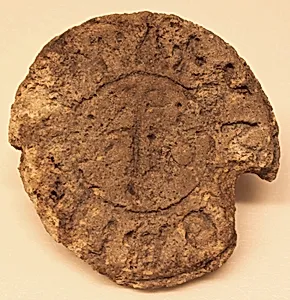
This unassuming clay seal for jars, dating to the 6th–7th century, offers a glimpse into the everyday commerce of the early Islamic world. Crafted by an unknown artist, it measures just 3 3/4 inches in diameter weighs a mere 4.1 ounces, designed to fit snugly over the mouth of storage vessels like amphorae or pottery jars. Likely originating from Egypt—thanks to its acquisition via the Egypt Exploration Fund in 1905—these were essential tools for trade and administration, stamped or impressed to secure contents and prevent tampering during transport along vital Silk Road and Nile routes. In the Department of Islamic Art at the Metropolitan Museum of Art, this artifact highlights the practical artistry of clay modeling, a humble yet durable medium favored for its accessibility and moldability. Seals like this one bridged late antique traditions (Byzantine and Sassanian influences) with emerging Islamic practices, symbolizing trust in burgeoning markets for goods like spices, oils, and grains. Though small, it embodies the ingenuity of ancient logistics, reminding us how mundane objects preserved economic lifelines across civilizations. A quiet testament to cultural continuity, it invites visitors to ponder the hands that pressed it into service over 1,300 years ago.