
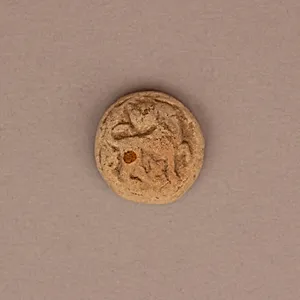
Seal Impression
Unknown Artist
8th–10th century
Medium
Earthenware; green slip covered, unglazed
Classification
Ceramics
Department
Islamic Art
Museum
Metropolitan Museum of Art, New York, NY
Credit
Rogers Fund, 1940
Accession Number
40.170.205
Rights
Public Domain
Art Historical Context
This exquisite seal impression, crafted from earthenware coated in green slip and left unglazed, hails from the Islamic world of the 8th–10th centuries—a golden era of the Abbasid Caliphate Dating to this period, it exemplifies early Islamic ceramics, where potters experimented with vibrant slips (liquid clay) to add color and texture without the need for costly glazes. The green hue, achieved through mineral pigments, evokes the natural landscapes and symbolic vitality cherished in Islamic art, while the unglazed surface highlights the raw, tactile quality of earthenware, a practical medium for everyday objects. Seal impressions like this one were vital administrative tools, used to authenticate documents, goods, and official seals in bustling trade hubs from Baghdad to Samarra. The technique involved pressing an intaglio seal into soft clay, creating a raised design that served both functional and decorative purposes. Though the artist remains unknown, this piece reflects the ingenuity of anonymous artisans who blended utility with subtle artistry, contributing to the rich ceramic traditions that influenced later lusterware and tilework across the Islamic realm. Acquired through the Rogers Fund in 1940, this artifact now graces the Metropolitan Museum of Art's Islamic Art department, offering visitors a tangible link to medieval bureaucracy and craftsmanship. Imagine the hands that once pressed it into clay— a quiet testament to the interconnected commerce of the ancient world.