
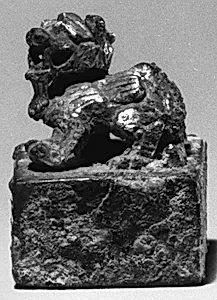
紀業私印|Seal with Knob in the Shape of a Chimera
Unknown Artist
ca. 3rd century
Medium
Gilded bronze
Dimensions
H. 3/4 In. (1.9 cm) W. 9/16 in. (1.4 cm); D. 9/16 in. (1.4 cm)
Classification
Seals
Culture & Period
China · Eastern Han (25–220)–Western Jin (265–316) dynasty
Department
Asian Art
Museum
Metropolitan Museum of Art, New York, NY
Credit
Charlotte C. and John C. Weber Collection, Gift of Charlotte C. and John C. Weber, 1994
Accession Number
1994.605.15
Rights
Public Domain
Tags
Art Historical Context
This delicate gilded bronze seal, titledSeal with Knob in the Shape a Chimera* (紀業私印), dates to around the 3rd century China's Eastern Han (25–220) to Western Jin (265316) dynasties. just 3/4 inch (1.9 cm) high, with a width and depth of 9/16 inch (1.4 cm), it exemplifies the exquisite miniaturization of ancient Chinese artistry. The knob, carved as a mythical chimera—a fantastical beast blending lion, dragon, and other fierce traits—served both functional and protective purposes, likely as a handle for stamping clay or wax on documents. Seals like this were essential in Han and Jin society for authenticating ownership, official decrees, or private correspondence, reflecting a bureaucratic culture where personal insignias held great authority. The inscription "紀業私印" suggests it was a private seal, possibly belonging to an individual named Ji Ye, highlighting the blend of elite status and everyday utility. Gilding the bronze with a thin gold layer added luster and prestige, a technique showcasing advanced metallurgy that elevated humble seals to treasures. In Chinese art, chimeras symbolized guardianship against evil spirits, infusing this artifact with spiritual significance. Now part of the Metropolitan Museum of Art's Asian Art collection, gifted by Charlotte C. and John C. Weber in 1994, it offers a glimpse into a dynamic era of cultural transition and artistic refinement.