
Sealing
Unknown Artist
ca. 7th century CE
Medium
Un-baked clay
Dimensions
1 1/4 × 1 1/4 × 1/2 in. (3.1 × 3.1 × 1.3 cm)
Classification
Clay-Sealings
Culture & Period
Sasanian · Sasanian
Department
Ancient Near Eastern Art
Museum
Metropolitan Museum of Art, New York, NY
Credit
Rogers Fund, 1936
Accession Number
36.30.172
Rights
Public Domain
Art Historical Context
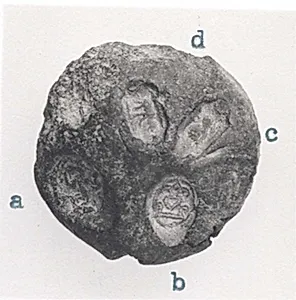
This delicate clay sealing, crafted by an unknown artist around the 7th century CE during the late Sasanian period, a tangible glimpse into the administrative world of ancient Persia. Measuring just 1¼ × 1¼ × ½ inches, this un-baked clay impression—likely pressed from a cylinder seal—was used to secure documents, containers, or doors, ensuring the integrity of goods and official correspondence. Its soft, unfired medium made it practical for everyday use but fragile over time, preserving the intricate details of the original seal's design. The Sasanian Empire (224–651 CE), a powerhouse of Persian culture bridging antiquity and the Islamic era, relied heavily on such sealings for bureaucracy, trade, and diplomacy. These small artifacts highlight the empire's sophisticated governance, where seals bore motifs of animals, deities, or royal symbols, reflecting Zoroastrian influences and artistic refinement in miniature form. Un-baked clay was a common choice for temporary seals, underscoring efficiency in a vast realm stretching from Mesopotamia to India. Acquired through the Rogers Fund in 1936 and housed in the Metropolitan Museum of Art's Ancient Near Eastern Art department, this sealing invites visitors to ponder the unseen hands that shaped daily security in a vibrant civilization. Though its exact impression is worn, it embodies the enduring legacy of Sasanian ingenuity.