
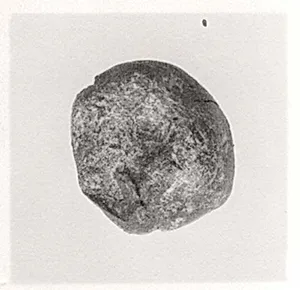
Sealing
Unknown Artist
ca. 7th century CE
Medium
Un-baked clay
Dimensions
0.59 in. (1.5 cm)
Classification
Clay-Sealings
Culture & Period
Sasanian · Sasanian
Department
Ancient Near Eastern Art
Museum
Metropolitan Museum of Art, New York, NY
Credit
Rogers Fund, 1936
Accession Number
36.30.190
Rights
Public Domain
Art Historical Context
This delicate clay sealing, crafted around the 7th century CE during the late Sasanian period, a tangible glimpse into the administrative heart of ancient Persia. Measuring just 0.59 inches (1.5 cm), this un-baked clay impression—likely from a stamp or cylinder seal—was used to secure documents, packages, or storage jars by encasing cords or strings in soft clay before it dried. The Sasanian Empire (224–651 CE), the last great pre-Islamic Persian dynasty, heavily on such sealings for bureaucracy, trade, and royal control, reflecting a sophisticated system of authentication across their vast realm from Mesopotamia to India. Unfired clay was a practical choice for these everyday objects, making them lightweight and quick to produce but also fragile, which underscores their functional rather than decorative purpose. As part of the Metropolitan Museum of Art's Ancient Near Eastern collection (acquired via the Rogers Fund in 1936), this artifact highlights Sasanian artistry in miniature: intricate motifs, often featuring rulers, animals, or deities, impressed into the clay to convey authority and identity. Though the specific design on this sealing remains unrecorded, it embodies the cultural fusion of Zoroastrian traditions, Hellenistic influences, and local innovations that defined Sasanian material culture. For visitors, it's a humble yet profound window into daily governance on the eve of Islam's arrival in Persia.