
Sealing
Unknown Artist
ca. 7th century CE
Medium
Un-baked clay
Dimensions
0.47 in. (1.19 cm)
Classification
Clay-Sealings
Culture & Period
Sasanian · Sasanian
Department
Ancient Near Eastern Art
Museum
Metropolitan Museum of Art, New York, NY
Credit
Rogers Fund, 1936
Accession Number
36.30.231
Rights
Public Domain
Art Historical Context
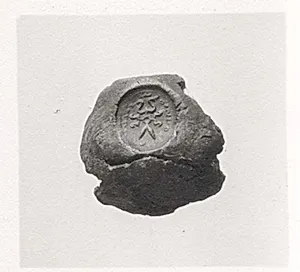
This delicate *Sealing*, crafted from un-baked clay around the 7th century, offers a fascinating window into the bustling administrative world of the Sasan Empire—the last great Persian dynasty before the Islamic conquest. Measuring just 0.47 (1.19 cm), this tiny artifact from the Metropolitan Museum of Art's Ancient Near Eastern collection was likely an impression made by pressing a seal into soft clay to secure documents, parcels, or storage jars. Such sealings were everyday tools of Sasanian bureaucracy, ensuring and preventing tampering in a vast empire stretching from Mesopotamia to India. The use of un-baked clay was practical and ingenious: it hardened naturally upon drying, capturing intricate details from the original seal without firing, which preserved the impression's fidelity. Sasanians excelled in glyptic art—carved seals depicting rulers, deities, animals, or symbols—blending Zoroastrian motifs with Hellenistic influences. Though the specific design here is not detailed, these objects highlight how art permeated daily governance, reflecting the empire's sophisticated economy and centralized power. Acquired through the Rogers Fund in 1936, this unassuming relic underscores the cultural importance of Sasanian precision and portability, bridging monumental architecture with intimate, functional artistry. Imagine the royal scribes at work—each press of a seal a quiet act of imperial order!