
Sealing
Unknown Artist
ca. 2030–1640 B.C.
Medium
Clay (unfired)
Classification
Sealing
Period
Middle Kingdom
Department
Egyptian Art
Museum
Metropolitan Museum of Art, New York, NY
Credit
Rogers Fund and Edward S. Harkness Gift, 1914
Accession Number
14.3.340
Rights
Public Domain
Art Historical Context
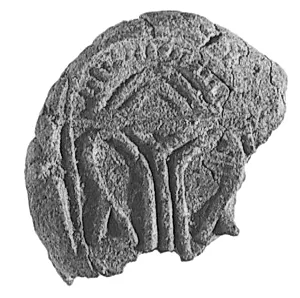
This delicate clay sealing, dating to Egypt's Middle Kingdom (ca. 2030–1640 B.C., Dynasties 12–13), offers a fascinating glimpse into the administrative heart of ancient Egypt. Created by an unknown artist, it is an impression made from a cylinder seal pressed into soft, unfired clay— a practical medium that hardened naturally over time without firing. Acquired by the Metropolitan Museum of Art the Rogers Fund and Edward. Harkness Gift in1914, it exemplifies everyday artifacts from a golden age of stability and cultural revival following the chaos of the First Intermediate Period. Cylinder sealings like this one were essential for security and bureaucracy, used to authenticate documents, secure storage jars, or seal doors against tampering. Rolled across the clay, the seal would leave intricate designs—often featuring hieroglyphs, royal cartouches, or symbolic motifs like scarabs and deities—visible only in reverse on the impression. The unfired clay's fragility highlights its utilitarian nature; many such objects survived by chance in rubbish heaps or tombs. Artistically, Middle Kingdom sealings reflect a shift toward more naturalistic and expressive styles, blending functionality with subtle elegance. This artifact underscores Egypt's sophisticated administrative systems, revealing how pharaohs like those of Dynasty 12 maintained order through everyday tools of power. A small but mighty survivor, it connects us to the scribes and officials who shaped one of history's greatest civilizations.