
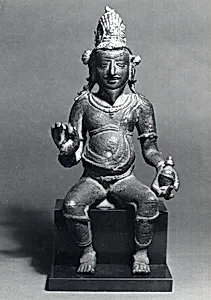
Seated Agastya
Unknown Artist
ca 8th–9th century (?)
Medium
Bronze
Dimensions
H. 11 5/16 in. (28.7 cm)
Classification
Sculpture
Culture
Indonesia (Sumatra)
Department
Asian Art
Museum
Metropolitan Museum of Art, New York, NY
Credit
Samuel Eilenberg Collection, Gift of Samuel Eilenberg, 1987
Accession Number
1987.142.59
Rights
Public Domain
Tags
Art Historical Context
### Seated Agastya This exquisite bronze sculpture depicts Agastya, a revered sage known as one of the saptarishis (seven great sages) in Hindu mythology. Seated in a meditative pose, the figure stands just over 11 inches tall and hails from Sumatra, Indonesia, dating to around the 8th–9th century. Crafted during the flourishing Srivijaya period—a powerful maritime empire that bridged Indian and Southeast Asian cultures—this artwork reflects the spread of Hinduism to the archipelago through trade and religious exchange. Bronze was a prized medium in ancient Indonesian art, often cast using the sophisticated lost-wax technique, allowing for intricate details in drapery, jewelry, and serene facial expressions that convey spiritual depth. Agastya holds particular significance in Shaivite traditions, symbolizing wisdom, asceticism, and the taming of southern India's wild terrains; in Sumatra, such sculptures adorned temples, embodying divine protection and scholarly devotion. From the Samuel Eilenberg Collection at The Metropolitan Museum of Art, this piece offers a window into Sumatra's golden age of Hindu art, where local artisans masterfully blended Indian iconography with regional sensibilities, inviting visitors to ponder the sage's enduring legacy of enlightenment.