
Seated Ananda
Unknown Artist
18th century
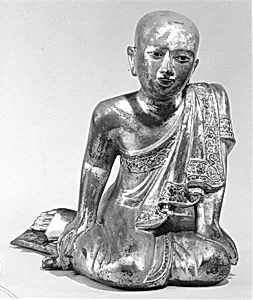
Medium
Wood, lacquer, gilt, and glass
Dimensions
H. 13 in. (33 cm); W. 12 1/4 in. (31.1 cm)
Classification
Sculpture
Culture
Burma
Department
Asian Art
Museum
Metropolitan Museum of Art, New York, NY
Credit
Purchase, Frederick P. Huntley Bequest, 1960
Accession Number
60.76
Rights
Public Domain
Tags
Art Historical Context
This exquisite 18th-century Burmese sculpture *Seated Ananda*, the devoted disciple of the Buddha in a serene meditative pose, embodying the spiritual depth of Theravada Buddhism prevalent in Burma (modern-day Myanmar). Crafted during a period when Burmese art flourished under royal patronage, such works adorned temples and monasteries, serving as focal points for devotion and teaching. Ananda, the's cousin and faithful attendant, is revered for memorizing and reciting the sutras at the First Buddhist Council, making him a symbol of unwavering loyalty and preservation of the Dharma. Carved from wood and enhanced with layers of lacquer, gold gilt, and glass inlays—likely for the eyes to convey lifelike expression—the sculpture exemplifies masterful Burmese techniques. The lacquer provided a protective, glossy finish ideal for humid climates, while the gilt added a radiant, divine glow, evoking the sacred aura of enlightenment. At 13 inches tall, its intimate scale suggests it was intended for personal or shrine worship rather than large temple displays. Housed in the Metropolitan Museum of Art's Asian Art Department (purchase from the Frederick P. Huntley Bequest, 1960), *Seated Ananda* offers visitors a tangible connection to Burma's rich Buddhist heritage, highlighting how everyday artisans channeled profound faith into enduring beauty.