
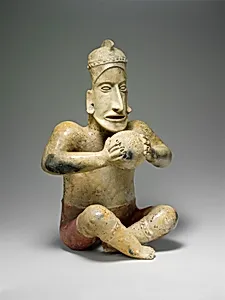
Seated Ballplayer
Unknown Artist
1st century BCE–3rd century CE
Medium
Ceramic
Dimensions
H. 19 × W. 13 × D. 9 3/8 in. (48.3 × 33 × 23.8 cm)
Classification
Ceramics-Sculpture
Culture
Ameca-Etzatlán
Department
Arts of Africa, Oceania, and the Americas
Museum
Metropolitan Museum of Art, New York, NY
Credit
Gift of The Andrall and Joanne Pearson Collection, 2005
Accession Number
2005.91.1
Rights
Public Domain
Tags
Art Historical Context
Welcome to the *Seated Ballplayer*, striking ceramic sculpture from the Am-Etzatlán culture West Mexico, crafted between the 1st century BCE and 3 century CE. Measuring nearly 19 inches tall, this hollow figurine captures a male figure in a seated pose, emblematic of the region's vibrant shaft-tomb ceramic tradition. Produced during the formative Pre-Columbian era, such works were often placed in tombs, reflecting beliefs in the afterlife and everyday life. The subject—a ballplayer—evokes the sacred Mesoamerican ballgame (tlachtli), a ritual sport blending athleticism, religion, and community. West Mexican cultures like Ameca-Etzatlán excelled in depicting these players, frozen in moments of poise or readiness, their forms conveying strength and cultural pride. This piece highlights the game's enduring role in Mesoamerican societies, from social bonding to symbolic warfare. Fashioned from fired clay, the sculpture demonstrates masterful hand-building techniques, with modeled features and possible slip decoration for vivid expression. Now at the Metropolitan Museum of Art through a generous gift, it invites us to ponder the artistry and rituals of an ancient people whose ceramics bridged the mortal and divine worlds.