
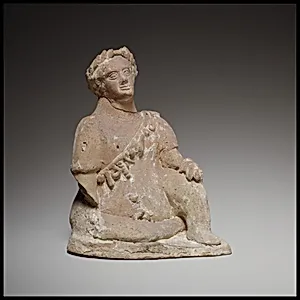
Seated boy
Unknown Artist
4th century BCE
Medium
Terracotta
Dimensions
H. 4 3/4 in. (12.1 cm)
Classification
Terracottas
Culture & Period
Cypriot · Cypro-Classical II
Department
Greek and Roman Art
Museum
Metropolitan Museum of Art, New York, NY
Credit
The Cesnola Collection, Purchased by subscription, 1874–76
Accession Number
74.51.1603
Rights
Public Domain
Tags
Art Historical Context
This charming terracotta figurine, *Seated Boy*, hails from Cyprus during the Cypro-Class II period in the 4th century. Standing just 4 3/4 inches (12.1 cm) tall, it captures a young boy in a relaxed seated pose, likely crafted as a votive offering for a sanctuary or household shrine. Terracotta, fired clay molded or hand-built, was a favored medium in ancient Cyprus for its accessibility and durability, allowing artisans to produce affordable yet expressive figures for everyday devotion. In Cypriot culture, blending Greek, Phoenician, and Near Eastern influences, such figurines held deep religious and social significance. Boys like this one might represent ideals of youth, fertility, or protection for children, commonly dedicated to deities such as Aphrodite or local gods. The Cypro-Classical style features stylized proportions and simple drapery, reflecting a shift toward more naturalistic forms amid Cyprus's role as a vibrant Mediterranean crossroads. Acquired through The Cesnola Collection and purchased by subscription in 1874–76, this piece now graces the Metropolitan Museum of Art's Greek and Roman Art department. It offers a poignant glimpse into ancient family life, reminding us how small sculptures bridged the mortal and divine worlds.