
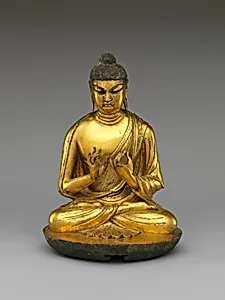
唐 鎏金青銅毗盧遮那佛坐像|Seated Buddha Vairocana
Unknown Artist
early 8th century
Medium
Gilt bronze
Dimensions
H. 8 in. (20.3 cm); W. 5 3/4 in. (14.6 cm); D. 5 1/2 in. (14 cm)
Classification
Sculpture
Culture & Period
China · Tang dynasty (618–907)
Department
Asian Art
Museum
Metropolitan Museum of Art, New York, NY
Credit
Rogers Fund, 1943
Accession Number
43.24.3
Rights
Public Domain
Tags
Art Historical Context
This exquisite gilt bronze Seated Buddha Vairocana crafted in early 8th-century China during the Tang dynasty (618907), embodies the era's artistic pinnacle and deep Buddhist devotion. Standing just 8 inches tall, this intimate sculpture likely served private worship, reflecting Buddhism's widespread influence amid the Tang's cosmopolitan prosperity—when silk roads brought diverse ideas and the faith flourished under imperial patronage. The figure depicts Vairocana, the cosmic Buddha symbolizing ultimate reality and enlightenment, seated in a meditative pose with a serene, rounded face and flowing robes that drape elegantly over a full-bodied form. Tang sculptors mastered lost-wax casting in bronze, then applied gilding for a radiant golden sheen, evoking divine light. This technique highlights the period's realism blended with spiritual idealization, showcasing plump, lifelike proportions that convey tranquility and abundance. Housed in the Metropolitan Museum of Art's Asian Art department (Rogers Fund, 1943), this masterpiece captures Tang China's cultural zenith, where art bridged the earthly and transcendent, inviting viewers to ponder the Buddha's eternal wisdom.