
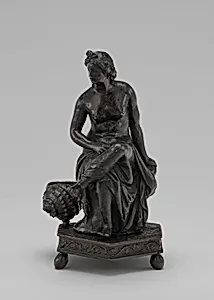
Seated Female Figure
early 16th century
Medium
bronze
Dimensions
overall: 19 x 13.2 x 13.3 cm (7 1/2 x 5 3/16 x 5 1/4 in.)
Classification
Sculpture
Department
CSD
Museum
National Gallery of Art, Washington, D.C.
Credit
Widener Collection
Accession Number
1942.9.138
Rights
Public Domain
Art Historical Context
The Seated Female Figure, created in the early 16th century by an anonymous North Italian artist, represents the refined tradition of small-scale bronze sculpture during the High Renaissance. Measuring just 19 centimeters tall, this compact work was likely cast using the lost-wax method, a technique prized for its ability to capture delicate details in drapery and anatomy. Such intimate bronzes were highly valued by Renaissance collectors for display in private studies or cabinets of curiosity. Northern Italy, encompassing artistic centers like Venice and Padua, fostered a vibrant culture of bronze production influenced by classical antiquity. Artists of this period often drew from ancient Roman models to explore balanced poses and serene expressions, transforming everyday materials into enduring symbols of grace and harmony. The sculpture’s seated pose suggests an emphasis on quiet contemplation, aligning with the humanist ideals of the time. Now part of the National Gallery of Art’s Widener Collection, this piece invites viewers to appreciate the technical skill and cultural sophistication of early 16th-century Italy. Its survival offers a tangible connection to the era’s artistic patronage and the timeless appeal of bronze as a medium for human form.