
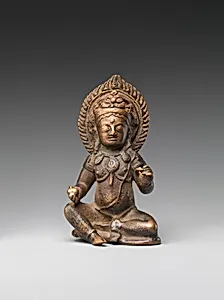
Seated Kubera
Unknown Artist
12th century(?)
Medium
Bronze
Dimensions
H. 4 1/8 in. (10.5 cm)
Classification
Sculpture
Culture
Nepal (Kathmandu Valley)
Department
Asian Art
Museum
Metropolitan Museum of Art, New York, NY
Credit
Samuel Eilenberg Collection, Gift of Samuel Eilenberg, 1987
Accession Number
1987.142.360
Rights
Public Domain
Art Historical Context
This exquisite bronze sculpture, *Seated Kubera*, hails from Nepal's Kathmandu Valley, likely crafted in the 12th century. Standing just 4 1/8 inches tall, it captures the Hindu god of wealth, Kubera—treasurer of the gods—in a serene seated pose, embodying prosperity and abundance. Produced by an unknown artist, it exemplifies the masterful metalwork of the Newar artisans in this vibrant cultural hub, where Hindu and Buddhist traditions intertwined. Bronze was a prized medium in medieval Nepalese sculpture, allowing for intricate lost-wax casting techniques that produced finely detailed figures with a rich patina over time. Kubera's depiction here reflects the region's artistic emphasis on divine benevolence, often featuring symbolic attributes like a moneybag or mongoose, underscoring themes of fortune central to daily life and temple rituals. Now part of the Metropolitan Museum of Art's Asian Art collection, gifted from the Samuel Eilenberg Collection in 1987, this small yet powerful piece invites visitors to ponder the enduring reverence for wealth's divine guardian in South Asian heritage.