
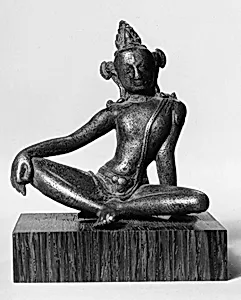
Seated Maitreya
Unknown Artist
9th century(?)
Medium
Bronze
Dimensions
H. 2 7/8 in. (7.3 cm)
Classification
Sculpture
Culture & Period
India · Pala period
Department
Asian Art
Museum
Metropolitan Museum of Art, New York, NY
Credit
Samuel Eilenberg Collection, Gift of Samuel Eilenberg, 1987
Accession Number
1987.142.347
Rights
Public Domain
Tags
Art Historical Context
This exquisite bronze sculpture, *Seated Maitreya hails from India's Pala period, likely dating to the 9th century. Crafted by an unknown artist, it stands just 2 7/8 inches (7.3 cm) tall, making it a intimate devotional object perfect for personal meditation or portable worship. The Pala dynasty (8th–12th centuries) in eastern India was a golden age for Buddhist art, with royal patronage fostering intricate metalwork that blended spiritual symbolism with masterful craftsmanship. Maitreya, the "Future Buddha," is depicted here in a serene seated pose, embodying hope for enlightenment in Mahayana Buddhism. Bronze was a prized medium in Pala sculptures, allowing for fine casting techniques that captured flowing robes, gentle expressions, and symbolic gestures like the meditative mudra. These small figures often adorned private shrines, reflecting the era's vibrant Buddhist culture amid Hindu and Tantric influences. Now part of the Metropolitan Museum of Art's Asian Art collection, gifted from the Samuel Eilenberg Collection in 1987, *Seated Maitreya* invites visitors to ponder the enduring promise of compassion and wisdom in ancient Indian artistry.