
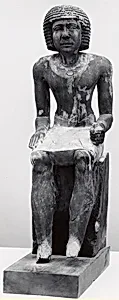
Seated Mitry with echelonned wig
Unknown Artist
ca. 2381–2323 B.C.
Medium
Acacia, gesso, paint
Dimensions
H. 77 × W. 38.7 × D. 25.4 cm, 13.8 kg (30 5/16 × 15 1/4 × 10 in., 30.4 lb.)
Classification
Statue, Merti seated, echelonned wig, Mitry
Period
Old Kingdom
Department
Egyptian Art
Museum
Metropolitan Museum of Art, New York, NY
Credit
Rogers Fund, 1926
Accession Number
26.2.6
Rights
Public Domain
Tags
Art Historical Context
Step into the world of ancient Egypt with *Seated Mitry withchelonned Wig*, a striking wooden statue from the Old's Dynasty 5 (ca. 2381–2323 B.C.). Carved from acacia wood—a durable native Egyptian timber—this seated figure of Mitry, likely a high-ranking official, captures the era's ideal of eternal composure. At nearly 77 cm tall, the sculpture depicts him in a classic rigid pose, hands on knees, wearing the distinctive echelonned (stepped) wig that signified elite status among men of influence. Created during the pyramid-building age of the Old Kingdom, such statues held profound cultural importance as *ka* figures for tombs. They served as eternal homes for the deceased's spirit, ensuring provisions and vitality in the afterlife through ritual offerings. The Met's example, acquired via the Rogers Fund in 1926, exemplifies Dynasty 5's refined artistry amid pharaonic prosperity under rulers like Sahure and Niuserre. Artistically, the figure was smoothed with gesso—a chalky plaster base—for intricate painting now faded but once vibrant with symbolic colors. This technique allowed fine details like the wig's layered tiers and serene facial features, blending realism with divine idealism. A testament to Egypt's enduring quest for immortality, it invites us to ponder Mitry's world of sun gods and stone monuments.