
Seated Mother Goddess
Unknown Artist
ca. 3000–2500 BCE
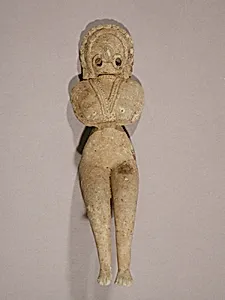
Medium
Terracotta
Dimensions
H. 5 1/4 in. (13.3 cm); W. 1 5/8 in. (4.1 cm)
Classification
Sculpture
Culture & Period
Pakistan (Baluchistan) · Indus Civilization, Mehrgarh style
Department
Asian Art
Museum
Metropolitan Museum of Art, New York, NY
Credit
Purchase, Nancy Wiener Gallery Gift, 2001
Accession Number
2001.305
Rights
Public Domain
Tags
Art Historical Context
Behold the *Seated Mother Goddess*, a captivating terracotta figurine from ancient Pakistan's Baluchistan region, crafted around 3000–2500 BCE during the Indus Civilization in the Mehrgarh style. Standing just 5¼ inches tall, this petite sculpture (H. 5¼ in.; W. 1⅝ in.) embodies the reverence for female divinity in one of the world's earliest urban societies. Acquired by the Metropolitan Museum of Art through the Nancy Wiener Gallery Gift in 2001, it now graces the Asian Art department. These mother goddess figures, common in Indus Valley cultures, likely symbolized fertility, protection, and the earth's nurturing power—central themes in prehistoric life amid farming communities at sites like Mehrgarh, a cradle of early South Asian civilization. The terracotta medium, fired clay hand-modeled with simple tools, highlights the era's accessible yet enduring artistry, allowing for mass production of sacred objects for households or rituals. Though the artist remains unknown, the figurine's seated pose and stylized form reflect Mehrgarh's distinctive aesthetic: compact, potent icons that bridged Neolithic traditions and the mature Indus era. A window into a lost world of mud-brick cities and monsoon rhythms, she invites us to ponder humanity's timeless quest for maternal solace.