
Seated Transcendent Buddha Vairochana
Unknown Artist
ca. second half of the 10th century
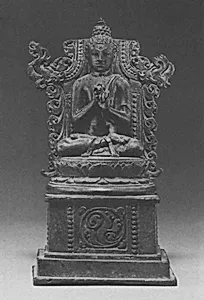
Medium
Buddha: silver; pedestal and throne back: bronze
Dimensions
H. 3 15/16 in. (10 cm)
Classification
Sculpture
Culture & Period
Indonesia (Java) · Eastern Javanese period
Department
Asian Art
Museum
Metropolitan Museum of Art, New York, NY
Credit
Samuel Eilenberg Collection, Gift of Samuel Eilenberg, 1987
Accession Number
1987.142.13
Rights
Public Domain
Tags
Art Historical Context
This exquisite small-scale sculpture, *Seated Transcendent Vairochana*, hails from Java, Indonesia, during the Eastern Javanese period in the second half of the10th century. Craft with the Buddha figure in shimmering silver and the pedestal and throne back in bronze, it stands just under 4 inches tall (10 cm), suggesting it was likely a devotional object for personal meditation or elite worship. Now housed in the Metropolitan Museum Art's Asian Art Department part of the Samuel Eberg Collection (gift of 1987), it exemplifies the refined metalworking traditions of ancient Javanese artisans. Vairochana, the "cosmic" or transcendent Buddha central to esoteric Buddhist practices, is depicted seated in a meditative pose, embodying primordial wisdom and the dharmakaya (truth body). During this era, Java's powerful kingdoms like Mataram blended Hindu and Buddhist influences, fostering sophisticated temple complexes such as Borobudur. The use of precious silver for the figure highlights its sacred status, possibly reserved for royalty or high priests, while bronze elements provided durability. Artistically, the sculpture reflects Eastern Javanese style's elegant proportions and serene iconography, with intricate detailing on the throne symbolizing the Buddha's enlightened realm. Though the artist remains unknown, this rare survivor offers a window into Buddhism's flourishing cultural role in pre-Islamic Java, inviting visitors to ponder its spiritual radiance.