
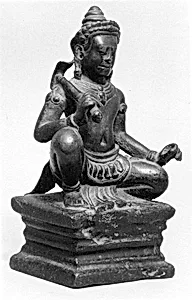
Seated Vishvakarman, the Divine Architect
Unknown Artist
ca. late 12th–early 13th century
Medium
Bronze
Dimensions
H. 6 1/2 in. (16.5 cm); W. 3 3/4 in. (9.5 cm); D. 2 1/2 in. (6.4 cm)
Classification
Sculpture
Culture & Period
Cambodia · Angkor period
Department
Asian Art
Museum
Metropolitan Museum of Art, New York, NY
Credit
Samuel Eilenberg Collection, Gift of Samuel Eilenberg, 1987
Accession Number
1987.142.3
Rights
Public Domain
Art Historical Context
This exquisite bronze sculpture, *Seated Vishvakar, the Divine Architect*,ails from Cambodia's Angkor period (ca. late 12th–early 13th century a golden age of Khmer artistry during the height of the Khmer Empire. Standing just 6 1/2 inches tall, it depicts Vishvakarman, the Hindu god revered as the celestial craftsman and architect of universe, responsible for forging divine weapons, palaces, and chariots. Seated in a graceful pose, likely in the royal ease (lalitasana) typical of Khmer deities, he embodies the fusion of mythology and monumental temple-building that defined Angkor's era—think Angkor Wat's towering spires. Crafted in bronze using the sophisticated lost-wax casting technique, this rare small-scale sculpture highlights the Khmer mastery of metallurgy. Bronzes from this period were precious ritual objects, often ritually consecrated and used in temple worship, far less common than stone carvings. Its compact dimensions (6 1/2 x 3 3/4 x 2 1/2 inches) suggest it was portable, perhaps for personal devotion by elites. Now part of the Metropolitan Museum of Art's Asian Art collection, thanks to the Samuel Eilenberg Collection (gift, 1987), this unknown artist's work offers a window into Angkor's spiritual and technical ingenuity, celebrating the divine spark behind humanity's grandest creations.