
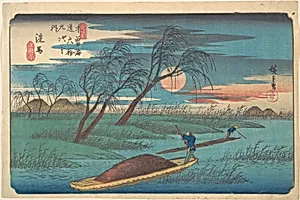
木曽海道六拾九次之内 洗馬|Senba Station
ca. 1836
Medium
Woodblock print; ink and color on paper
Dimensions
8 3/4 x 13 3/4 in. (22.2 x 34.9 cm)
Classification
Prints
Culture & Period
Japan · Edo period (1615–1868)
Department
Asian Art
Museum
Metropolitan Museum of Art, New York, NY
Credit
The Howard Mansfield Collection, Purchase, Rogers Fund, 1936
Accession Number
JP2542
Rights
Public Domain
Tags
Art Historical Context
Welcome to the Metropolitan Museum of Art's Asian Art collection, where Utagawa Hiroshige *Senba Station* from *The Sixty-nine Stations of the Kiso Kō* (ca. 1836) transports us along one of Japan's historic post roads. This woodblock print captures the bustling Senba Station on the Kiso Kaidō, an inland route paralleling the more famous Tōkaid highway during the Edo period (1615–1868). Hiroshige, a of the ukiyo-e ("pictures of the floating world") tradition, vividly depicts travelers, boats on a rushing river, and dramatic landscapes, evoking the perils and beauty of pilgrimage and commerce in feudal Japan. Printed with ink and color on paper in the Ōban format (about 8¾ × 13¾ in.), the work showcases Hiroshige's genius for atmospheric perspective and subtle color gradients, achieved through collaborative woodblock carving by artisans. Figures—men ferrying horses or navigating waters—add human scale to towering cliffs and swirling currents, highlighting the era's growing fascination with nature's majesty amid everyday journeys. This series, rivaling Hiroshige's Tōkaidō prints, democratized landscape art for urban audiences hungry for distant vistas. A gem from The Howard Mansfield Collection (Purchase, Rogers Fund, 1936), *Senba Station* reflects Edo Japan's cultural bloom, where such prints fueled wanderlust and later inspired Western artists like Van Gogh. Pause here to imagine the spray of the river and echoes of travelers' tales!
About the Artist
Utagawa Hiroshige · 1826–1869
Utagawa Hiroshige (1797–1858), born Andō Tokutarō, was the last great master of Japanese ukiyo-e woodblock printmaking and one of the most influential landscape artists in history. Born in Edo (modern Tokyo) into a low-ranking samurai family serving as fire wardens, Hiroshige transformed landscape printmaking into a poetic meditation on nature, weather, and everyday life. His revolutionary approac...