
Serpentine Triangular Prism
Unknown Artist
ca. 1800–1600 BCE
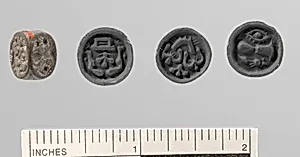
Medium
Serpentine
Dimensions
Other: 7/16 in. (1.2 cm)
Classification
Gems
Culture & Period
Minoan · Middle Minoan II
Department
Greek and Roman Art
Museum
Metropolitan Museum of Art, New York, NY
Credit
Bequest of Richard B. Seager, 1926
Accession Number
26.31.175
Rights
Public Domain
Art Historical Context
This exquisite *Serpentine Triangular* is a tiny gem from the Minoan of Crete, dating to the Middle Minoan II (ca. 1800–1600 BCE). Measuring just 7/16 inch (1.2 cm), it exemplifies the masterful craftsmanship of Bronze Age artisans who created intricate seals and amulets for administrative, ritual, or decorative purposes. Minoan culture, flourishing on Crete before the rise of Mycenaean Greece, is renowned for its vibrant palaces like Knossos and sophisticated society, where such objects played key roles in trade, bureaucracy, and symbolism. Carved from serpentine—a smooth, green metamorphic stone prized for its durability and lustrous polish—this prism's triangular form allowed for multiple engraved faces, a practical innovation for stamping clay documents or sealing goods. Gems like this highlight Minoan technical prowess in hard-stone carving, often using fine tools to achieve detailed motifs, though the specific designs here remain a tantalizing mystery. Its presence in the Metropolitan Museum of Art's Greek and Roman Art Department, thanks to the 1926 bequest of archaeologist Richard B. Seager, connects us to early 20th-century excavations that unveiled Minoan splendor. (198 words)