
Set of four miniature second course dishes
ca. 1720–30
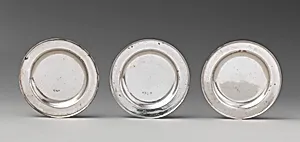
Medium
Silver
Dimensions
Diameter (each): 1 7/8 in. (4.8 cm)
Classification
Metalwork-Silver-Miniature
Culture
British, London
Department
European Sculpture and Decorative Arts
Museum
Metropolitan Museum of Art, New York, NY
Credit
The Joseph M. and Aimee Loeb May Collection, 1963
Accession Number
63.53.173–.176
Rights
Public Domain
Art Historical Context
This exquisite set of four miniature second dishes, crafted by London silversmith David Clayton 1720–30, captures the opulence of early Georgian Britain in petite form. Each dish measures just 1 7/8 inches in diameter, yet they mirror the grandeur of full-scale silver tableware used in elite households. Produced during the reign of George I, when silver became a status symbol for the rising merchant class, these pieces exemplify the rococo influences beginning to soften the era's weighty Baroque designs with delicate chasing and piercing. Clayton's mastery shines in the silver's hallmarks—stamped for London assay—ensuring purity and authenticity. Miniature silver services like this were prized collector's items, often adorning dollhouses for aristocratic children or serving as whimsical desk ornaments for adults. They highlight the silversmith's virtuosity: intricate repoussé work and smooth polishing that demanded precision on such a tiny scale, rivaling jewelry craftsmanship. Housed in The Metropolitan Museum of Art's European Sculpture and Decorative Arts Department, this set from The Joseph M. and Aimee Loeb May Collection invites visitors to ponder the playful luxury of 18th-century life, where even the smallest objects reflected immense wealth and artistry.
About the Artist
David Clayton · 1659–1719
David Clayton was an American artist active during the New Deal era who contributed to the Index of American Design, the federal government's sweeping effort to document American decorative arts and folk traditions through watercolor illustration. Organized under the Works Progress Administration's Federal Art Project beginning in 1935, the Index employed artists in thirty-four states to render ev...