
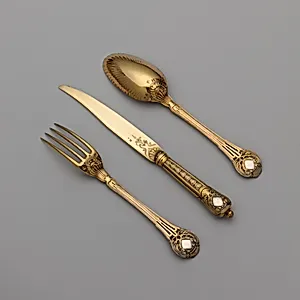
Set of six knives
1767–71
Medium
Gilt silver, silver
Dimensions
Length (each): 8 7/16 in. (21.4 cm)
Classification
Metalwork-Silver
Culture
French, Paris
Department
European Sculpture and Decorative Arts
Museum
Metropolitan Museum of Art, New York, NY
Credit
Gift of Mr. and Mrs. Charles Wrightsman, 1979
Accession Number
1979.396.16–.21
Rights
Public Domain
Art Historical Context
This exquisite set of six knives, by Parisian silversmith Louis-Josephenhendrick between 7 and 1771, exemplifies the opulent metalwork of late Louis XV-era France. Fashioned from silver with gilt accents—gold applied over the silver surface for a luxurious sheen—each knife measures8 7/16 inches (21.4 cm) long, perfectly suited for formal dining. Lenhendrick, a goldsmith working in Paris, adhered to the strict guild standards that ensured unparalleled quality in European decorative arts. These knives reflect the height of rococo refinement transitioning toward neoclassicism, where silverware was not mere utility but a canvas for intricate chasing, engraving, and gilding techniques. Owned by the aristocracy, such sets symbolized wealth and taste, adorning lavish banquet tables amid the cultural splendor of Versailles. Their survival highlights the enduring appeal of 18th-century French craftsmanship, prized for both functionality and artistry. Today, this treasured gift from Mr. and Mrs. Charles Wrightsman (1979) graces the Metropolitan Museum of Art's European Sculpture and Decorative Arts collection, inviting visitors to appreciate the meticulous skill that elevated everyday objects into heirlooms of history.