
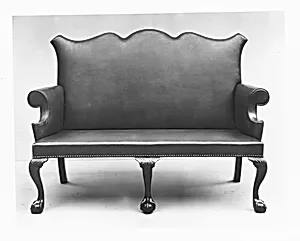
Settee
1757–60
Medium
Mahogany, red oak, cherry, pine
Dimensions
45 1/4 x 63 1/2 x 27 1/2 in. (114.9 x 161.3 x 69.9 cm)
Classification
Settee
Culture
American
Department
The American Wing
Museum
Metropolitan Museum of Art, New York, NY
Credit
Gift of Mrs. John J. Riker, 1932
Accession Number
32.51.1
Rights
Public Domain
Art Historical Context
This elegant settee, crafted by Philadelphia cabinetmaker Joseph Cox between1757 and 1760, exemplifies the refined furniture of colonial America during the Chippendale era. Measuring an impressive 45¼ x 63½ x 27½ inches, it was designed for comfortable seating in prosperous homes, blending functionality with sophisticated ornamentation typical of the period's Rococo influences. Cox, a skilled artisan active in Philadelphia's thriving cabinetmaking scene, favored bold cabriole legs and carved details that showcased his mastery of form and proportion. Constructed primarily from luxurious mahogany—a premium imported wood symbolizing wealth and status—the settee incorporates red oak, cherry, and pine for structural support, highlighting efficient 18th-century woodworking techniques. These native and tropical woods were joined with precise mortise-and-tenon construction, ensuring durability while allowing for intricate shaping that reflected European design trends adapted to American tastes. Housed in The Metropolitan Museum of Art's American Wing, this piece, generously gifted by Mrs. John J. Riker in 1932, offers a window into pre-Revolutionary elite life. It underscores Philadelphia's role as a hub of fine craftsmanship, where furniture like this settee served as both practical furnishing and a statement of social refinement.