
Seven Sages in the Bamboo Grove
19th century
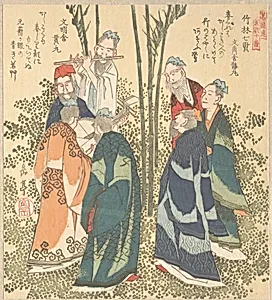
Medium
Woodblock print (surimono); ink and color on paper
Dimensions
8 1/8 x 7 5/16 in. (20.6 x 18.6 cm)
Classification
Prints
Culture & Period
Japan · Edo period (1615–1868)
Department
Asian Art
Museum
Metropolitan Museum of Art, New York, NY
Credit
H. O. Havemeyer Collection, Bequest of Mrs. H. O. Havemeyer, 1929
Accession Number
JP2100
Rights
Public Domain
Tags
Art Historical Context
In the serene confines of a bamboo grove, Yashima Gakute *Seven Sages in the Grove* (19th century) captures a timeless scene of scholarly retreat. This intimate woodblock print, or *surimono*, depicts seven wise men immersed in nature, some playing flutes amid swaying bamboo stalks. Created during Japan's Edo period (16151868), it reflects the era's fascination with ukiyo-e traditions—delicate, colorful prints that brought poetry and elegance to everyday life. *Surimono* like this one were luxurious, privately commissioned works, often featuring embossing, mica, and vibrant inks on fine paper to evoke poetic refinement. Gakutei, a master of the form, skillfully layers ink and color to suggest depth and harmony, symbolizing the Chinese legend of the Seven Sages who escaped worldly turmoil for intellectual pursuits in nature. Bamboo, a motif of resilience and purity in East Asian culture, frames their flute melodies, inviting viewers to ponder themes of harmony and escape. From the H.O. Havemeyer Collection at the Metropolitan Museum of Art, this 8⅛ x 7½-inch gem (20.6 x 18.6 cm) exemplifies Edo Japan's artistic pinnacle, blending technical virtuosity with philosophical depth for an enduring whisper of tranquility.
About the Artist
Yashima Gakutei · 1786–1868
Yashima Gakutei (c. 1786–1868), born in Osaka as the illegitimate son of a Tokugawa shogunate samurai named Hirata, adopted the name from his mother's subsequent marriage into the Yashima clan. Little is documented about his early years beyond these familial ties, but he pursued artistic training under the esteemed ukiyo-e masters Totoya Hokkei and Katsushika Hokusai, absorbing their precision in ...