
Shabti and Shabti Coffin
Unknown Artist
ca. 1580–1479 B.C.
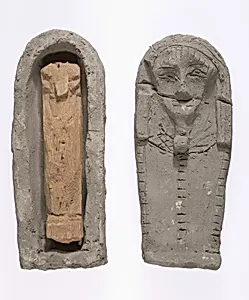
Medium
Mud, wood
Dimensions
L. of coffin 6.3 cm (2 1/2 in)
Classification
Shabti, shabti coffin
Period
Second Intermediate Period–early New Kingdom
Department
Egyptian Art
Museum
Metropolitan Museum of Art, New York, NY
Credit
Gift of the Earl of Carnarvon, 1914
Accession Number
14.10.10a–c
Rights
Public Domain
Tags
Art Historical Context
Step into the ancient Egyptian afterlife with this delicate *Shabti and Shabti Coffin*, a tiny treasure from the Second Intermediate Period to early New Kingdom (ca. 1580–1479 B.C.), spanning Dynasties 17–18. Crafted by an unknown artist from humble mud and wood, the coffin's length measures just 6.3 cm (2½ in.), embodying the Egyptians' meticulous attention to even the smallest funerary objects. Shabtis—miniature servant figures—were placed in tombs to perform labor for their owners in the eternal realm, a belief rooted in spells from the Book of the Dead. This artifact highlights a pivotal era of transition, as Egypt regained unity under the Theban rulers of Dynasty 17, paving the way for the New Kingdom's golden age. The use of mud (likely sun-dried or modeled clay) for the figure and wood for the coffin reflects practical techniques suited to mass production, allowing even modest burials to include these protective servants. Inscribed or painted with hieroglyphs (though not specified here), shabtis activated magically through ritual. A generous gift to the Metropolitan Museum of Art from the Earl of Carnarvon in 1914—who later sponsored Tutankhamun's tomb discovery—this piece invites us to ponder the ancient hope for immortality, preserved in intimate scale for eternity.