
Shabti of Nesenaset
Unknown Artist
ca. 1070–945 B.C.
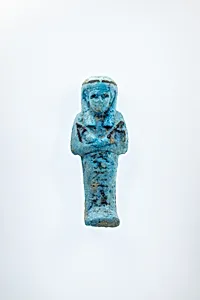
Medium
Faience
Dimensions
H 10.9 × W 4.4 × D 2.7 cm (4 5/16 × 1 3/4 × 1 1/16 in.)
Classification
Shabti, Nesenaset
Period
Third Intermediate Period
Department
Egyptian Art
Museum
Metropolitan Museum of Art, New York, NY
Credit
Rogers Fund, 1925
Accession Number
25.3.23d
Rights
Public Domain
Art Historical Context
Welcome to the Egyptian Art galleries at the Metropolitan Museum of Art where we encounter the enchanting *Shabti of Nesenaset*, a small yet profound funerary figurine from Egypt's Third Intermediate Period (ca.1070–945 B.C.), specifically Dynasty 21. Crafted around 3,000 years ago, this shabti—measuring just 10.9 cm tall—was designed as a servant for the afterlife. In ancient Egyptian belief, these mummiform figures, often inscribed with spells from the Book of the Dead, would magically awaken to perform laborious tasks for their owner in the realm of Osiris, sparing the deceased from eternal toil. Made of vibrant blue-green faience, a glazed ceramic composite of crushed quartz and pottery, this shabti exemplifies the era's accessible artistry. Faience's glassy sheen mimicked precious lapis lazuli, symbolizing rebirth and the Nile's fertility, while allowing mass production for burials across social classes. During Dynasty 21, a time of political fragmentation with Theban priests holding sway, such figurines reflected enduring religious traditions amid transition. Acquired through the Rogers Fund in 1925 (25.3.182), Nesenaset's shabti invites us to ponder ancient hopes for eternity—modest in size, immense in cultural resonance. A testament to Egypt's innovative fusion of faith, craft, and daily life.