
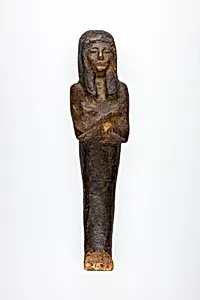
Shabti with horizontal bands of inscription
Unknown Artist
1295–1070 B.C.
Medium
Wood, plaster, paint
Dimensions
H 24 × W 5.9 × D 4 cm (9 7/16 × 2 5/16 × 1 9/16 in.)
Classification
Shabti
Period
Ramesside Period
Department
Egyptian Art
Museum
Metropolitan Museum of Art, New York, NY
Credit
Gift of Lucille Miller, 2011
Accession Number
2011.231
Rights
Public Domain
Tags
Art Historical Context
This wooden shabti, created during Egypt’s Ramesside Period (Dynasties 19–20, 1295–1070 B.C.), served as a magical servant for the deceased. In ancient Egyptian belief, such figures were placed in tombs to perform any labor the gods might demand in the afterlife, freeing their owner for eternal rest. Standing only 24 centimeters tall, this compact example would have been one of many placed in a burial, ready to answer the call of its inscribed spells. Made of wood coated with plaster and painted, the figure carries horizontal bands of text across its body. These inscriptions typically quote chapters from the Book of the Dead, transforming the shabti into an active worker when recited. The choice of wood allowed artisans to carve fine details while plaster and paint added color and protection, reflecting both practical craftsmanship and ritual purpose. As a funerary object from the Metropolitan Museum’s Egyptian Art collection, this shabti reveals how Egyptians prepared for the next world with care and ingenuity. Its gift to the museum in 2011 by Lucille Miller preserves a small but vivid window into these ancient customs.