
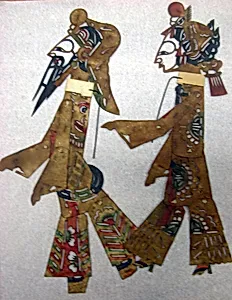
Shadow player
Unknown Artist
19th century
Medium
Donkey skin, cord
Dimensions
H. (approx.) 9 1/4 in. (23.5 cm)
Classification
Leatherwork
Culture
China
Department
Asian Art
Museum
Metropolitan Museum of Art, New York, NY
Credit
Gift of H. J. Tei, 1920
Accession Number
20.31.20
Rights
Public Domain
Tags
Art Historical Context
Step into the enchanting world of Chinese shadow puppetry with *Shadow Player*, a delicate 19th-century leatherwork figure from the Metropolitan Museum of Art's Asian Art collection Crafted from translucent donkey skin and articulated with cord, this approximately 9¼-inch (23.5 cm) puppet stands as a testament to an ancient folk art form that captivated audiences across rural China. Gifted to the museum in 1920 by H. J. Tei, it evokes the lively performances where puppeteers manipulated figures behind a lit screen to cast dramatic shadows. Chinese shadow play, or *pi ying xi*, emerged over a millennium ago during the Tang Dynasty and flourished in the Qing era, blending storytelling, music, and visual spectacle for festivals, rituals, and moral tales. The medium's brilliance lies in its technique: artisans soaked, oiled, and dyed donkey hide for translucency, then meticulously cut intricate patterns and painted vibrant details with mineral pigments. Rods and cords allowed fluid movements, bringing characters—often men and women in elaborate robes—to life, as suggested by this piece's thematic tags. This *Shadow Player* highlights shadow theater's cultural role in preserving folklore, history, and social commentary, bridging entertainment and tradition. Though the artist remains unknown, its survival offers a window into everyday artistry that once illuminated village nights, reminding us of performance's timeless magic.