
Shaffron
c. 1575
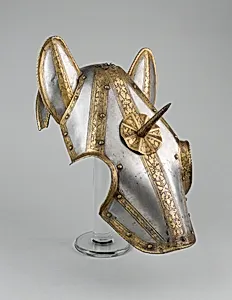
Medium
Steel with gilding
Dimensions
H.: 35.6 cm (14 in.)
Classification
horse equipment
Museum
Art Institute of Chicago
Accession Number
199854
Rights
Public Domain
About this artwork
Chivalry—with its connotation of the knightly ideal—was intimately connected with the horse (cheval in French). A knight took care to protect his mount, on which he was dependent for the mobility and speed required in both attack and retreat. In Roman times, some heavy cavalry used armor made of iron or bronze scales to protect their horses. From the twelth century on, knights covered their steeds in bands of iron mail (a network of interlocking rings). By the fifteenth century, full-plate armor...
Art Historical Context
Step into the world of Renaissance warfare and chivalry with this stunning *Shaffron*, a protective headplate for warhorses dating to around 1575. Crafted from steel and adorned with gilding, this 14-inch-high piece (35.6 cm) was designed to shield a horse's face from enemy blows during battle, while its luxurious gold accents elevated it beyond mere utility—likely for a noble rider's steed. In the late 16th century, was rife with conflicts like the Wars of Religion, where heavily armored cavalry played a pivotal role. Shaffrons like this one symbolized the fusion of martial prowess and opulent display, often worn in tournaments or processions to showcase wealth and status. The unknown artisan's mastery of steelworking—forging, shaping, and applying gilding—highlights the era's advanced metalcraft, blending functionality with decorative flair. Today, housed at the Art Institute of Chicago, this artifact invites us to imagine thundering hooves on the battlefield, reminding visitors of the vital role horses held in history's grand narratives. A true marvel of equine armor!
About the Artist
Unknown
The artist designated as "Unknown" in our virtual museum's collection exemplifies a poignant chapter in art history: creators whose identities have faded into obscurity despite the enduring power of their work. With only one known artwork attributed to them in our holdings, this figure represents countless anonymous hands that shaped visual culture across centuries. Museums worldwide, including th...