
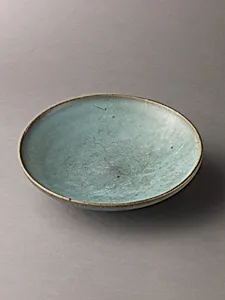
Shallow dish, Jun ware
11th–12th century
Medium
Stoneware with blue glaze.
Dimensions
Diameter: 7 3/8 in. (18.7cm.)
Classification
Ceramics
Culture
Chinese
Department
Robert Lehman Collection
Museum
Metropolitan Museum of Art, New York, NY
Credit
Robert Lehman Collection, 1975
Accession Number
1975.1.1650
Rights
Public Domain
Art Historical Context
This exquisite shallow dish exemplifies Jun ware, a pinnacle of Chinese ceramic artistry from the Song dynasty (11th–12th century). Crafted from stoneware and coated in a signature blue glaze, it measures 7 3/8 inches (18.7 cm) in diameter, perfect for serving delicate foods or ritual offerings. The dish's wide, shallow form reflects the refined aesthetics of Song-era pottery, where functionality met poetic beauty. Jun ware, produced in kilns near Yuandai in Henan province, is renowned for its innovative glazing techniques. Artisans applied thick, iron-rich glazes fired in reduction kilns, yielding mesmerizing shades of sky-blue with subtle purple flashes and distinctive "ice crackle" patterns formed by glaze contraction. These unpredictable effects—unique to each piece—symbolized the harmony of nature and human craft, earning Jun ware a place among imperial favorites. Housed in the Robert Lehman Collection at The Metropolitan Museum of Art since 1975, this dish invites visitors to appreciate the Song dynasty's ceramic golden age, when potters pushed technical boundaries to evoke the cosmos in clay. A testament to China's enduring ceramic legacy, it whispers of ancient kilns alive with fire and color.
About the Artist
Chinese
The artist known simply as "Chinese" in museum records represents the vast tradition of anonymous or unattributed masters in Chinese art history, with 99 works preserved in our collection. These pieces exemplify the enduring legacy of guó huà, or traditional Chinese painting, one of the world's oldest continuous artistic practices. Early life is not well documented, as is common for many practitio...