
Shandao
Unknown Artist
18th–early 19th century
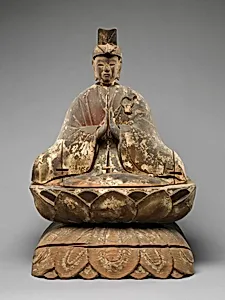
Medium
Wood, with traces of color and gilt and inset glass eyes
Dimensions
H. 34 in. (86.4 cm); W. 24 in. (61 cm); D. 12 in. (30.5 cm)
Classification
Sculpture
Culture & Period
Japan · Edo period (1615–1868)
Department
Asian Art
Museum
Metropolitan Museum of Art, New York, NY
Credit
Rogers Fund, 1912
Accession Number
12.37.168
Rights
Public Domain
Tags
Art Historical Context
This striking wooden sculpture depicts Shandao (613–681), a Chinese monk who championed Pure Land Buddhism, emphasizing faith in Amida Buddha for salvation. Crafted in Japan during the Edo period (1615–1868), it captures the monk in contemplative repose, seated with clasped hands and a serene expression that invites viewers to reflect on spiritual devotion. Acquired through the Rogers Fund in 2, this piece from the Metropolitan Museum of Art's Asian collection exemplifies how Buddhist icons bridged Chinese teachings with Japanese temple traditions. Edo-period sculptures like this one flourished amid Japan's peaceful isolation, when woodcarving became a refined craft for religious art. The artist's anonymous skill shines in the lifelike details: traces of vibrant color and gold gilt evoke the statue's original splendor, while inset glass eyes lend an uncanny realism, drawing worshippers into the monk's gaze. Standing at 34 inches tall, its substantial yet approachable scale made it ideal for temple altars or processions. Shandao's legacy endures in Japanese Pure Land sects, where such figures inspired lay devotion during the Edo era's urbanizing society. This sculpture not only preserves artistic mastery but also whispers of Buddhism's enduring cultural heartbeat in Japan.