
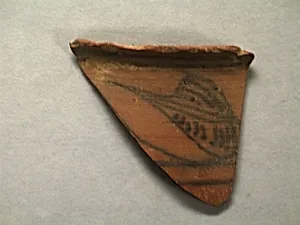
Shard
Unknown Artist
ca. 4th–5th century
Medium
Painted terracotta
Dimensions
H. 1 5/8 in. (4.1 cm); W. 2 (5.1 cm); D. 1/2 in. (1.3 cm)
Classification
Ceramics
Culture
Pakistan
Department
Asian Art
Museum
Metropolitan Museum of Art, New York, NY
Credit
Seymour Fund, 1992
Accession Number
1992.271.36
Rights
Public Domain
Tags
Art Historical Context
This delicate *Shard*, a painted terracotta fragment from ancient (ca. 4th–5th century), a glimpse into the everyday artistry of the Gandhara region. Measuring just 1 5/8 inches high 2 inches wide, this tiny ceramic piece—acquired through the Seymour Fund in 2 and now in the Metropolitan Museum of Art Asian Art Department—survives as a testament to skilled craftsmanship in a bustling cultural crossroads. Gandhara, spanning modern-day Pakistan and Afghanistan, was a vibrant hub during the Kushan and its aftermath, where Greco-Roman, Persian, and Indian influences fused, most famously in Buddhist sculpture. While grand schist statues dominate Gandharan fame, humble terracotta objects like this shard reveal the region's broader ceramic traditions, likely used in pottery, architectural decoration, or votive items. The medium of painted terracotta highlights innovative techniques: clay molded, fired for durability, then adorned with pigments that captured vibrant designs, now faded but evocative. As a rare survivor, it underscores the cultural richness of pre-Islamic South Asia, inviting us to ponder the lives and aesthetics of artisans over 1,500 years ago.