
Shaving Mug
1818–48
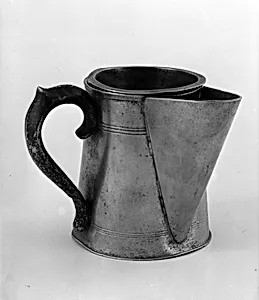
Medium
Pewter
Dimensions
H. 4 1/2 in. (11.4 cm)
Classification
Shaving mug
Culture
American
Department
The American Wing
Museum
Metropolitan Museum of Art, New York, NY
Credit
Gift of Joseph France, 1943
Accession Number
43.162.36a, b
Rights
Public Domain
Art Historical Context
Nestled in The Metropolitan Museum of Art's American Wing, this unassuming yet elegant **Shaving Mug** by Richardson (1818–48) offers a glimpse into everyday life in early 19th-century. Crafted from pewter—a durable alloy of tin, antimony, copper prized for its silvery sheen and malleability—the mug stands at a practical 4½ inches tall. Its simple, functional form reflects the utilitarian beauty of American decorative arts during the antebellum era, when pewterers like Richardson supplied households with essential tableware and personal items before mass-produced ceramics took over. Shaving mugs like this one were indispensable for the wet-shaving ritual popular among American men, holding warm water and lathering soap for a close, hygienic shave—a daily grooming staple before safety razors emerged later in the century. Pewter's cool touch and resistance to corrosion made it ideal for such uses, showcasing skilled handcrafting techniques like spinning and seaming that highlighted regional workshops in the Northeast. George Richardson, a noted American pewtersmith, exemplifies the craftsmanship of this period, blending European traditions with emerging American ingenuity. Gifted to the Met in 1943 by Joseph France, this piece invites us to appreciate the artistry in ordinary objects, connecting us to the tactile routines of our forebears.