
Shawl
Unknown Artist
ca. 1860
Medium
Applied
Dimensions
L. 114 x W. 56 1/4 inches 289.6 x 142.9 cm
Classification
Textiles-Laces
Culture
Belgian, Brussels
Department
European Sculpture and Decorative Arts
Museum
Metropolitan Museum of Art, New York, NY
Credit
Gift of Mrs. R. T. Auchmuty, 1917
Accession Number
17.15.4
Rights
Public Domain
Tags
Art Historical Context
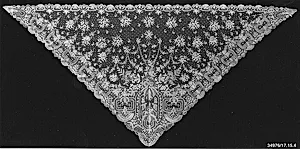
This elegant shawl, crafted in Brussels around 1860, exemplifies the of 19th-century Belgian lace. Measuring an impressive 114 by 56¼ inches (289.6 x 142.9 cm), it belongs to the Metropolitan Museum of Art's European Sculpture and Decorative collection, gifted by Mrs. R. T. Auchmuty in 1917. Classified as a textile-lace with an "applied" technique—likely referring to appliqué lace, where intricate motifs are meticulously sewn onto a fine net ground—the shawl features delicate floral designs that capture the Victorian era's love for nature-inspired ornamentation. Brussels was a global center for luxury lace production during this period, renowned for its needlepoint and appliqué methods that rivaled fine embroidery in complexity. These shawls were prized accessories for affluent women, draped over evening gowns or carried as status symbols at social events, blending functionality with opulent artistry. The unknown artist's mastery highlights the collaborative guild traditions of Brussels workshops, where skilled artisans produced pieces that could take months to complete. Today, this shawl offers a tactile glimpse into Belgium's textile heritage, showcasing the labor-intensive techniques that defined pre-industrial decorative arts before machine-made alternatives emerged. Its preservation at the Met invites visitors to appreciate the fleeting beauty of handmade lace in an age of rapid innovation.