
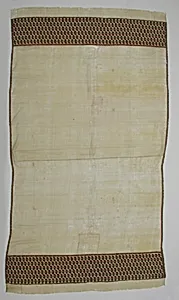
Shawl
Unknown Artist
early 19th century
Medium
Wool; twill weave and double interlocking twill tapestry weave
Dimensions
Textile: L. 86 1/2 in. (219.7 cm0 W. 48 1/2 in. (123.2 cm)
Classification
Textiles-Costumes
Department
Islamic Art
Museum
Metropolitan Museum of Art, New York, NY
Credit
Rogers Fund, 1955
Accession Number
55.23
Rights
Public Domain
Art Historical Context
This exquisite wool shawl, crafted by an unknown artist in the 19th century, hails from the Islamic world and exemplifies the refined artistry of textiles in that era. Measuring an impressive 86½ inches long by 48½ inches wide, it was likely worn as a luxurious garment or wrap, symbolizing status and elegance. Acquired through the Rogers Fund in 1955, it now graces the Metropolitan Museum of Art's Art department, where it invites visitors to appreciate the cultural splendor of Islamic craftsmanship. The shawl's construction highlights sophisticated weaving techniques: a twill weave base provides durability and a subtle diagonal texture, while the double interlocking twill tapestry weave allows for intricate, seamless patterns. This advanced method—common in high-end Islamic textiles—interlocks warp threads between weft colors, preventing slits and enabling vibrant, complex designs without cutting the fabric. Such skill reflects the mastery of weavers in regions like Persia or the Ottoman Empire, where textiles were prized for both utility and beauty. In the early 19th century, as global trade flourished, shawls like this bridged cultures, influencing European fashion while preserving Islamic traditions of opulent handiwork. testament to anonymous artisans' genius, it reminds us how everyday fabrics carried profound artistic and social weight.