
Shawl with Coptic Inscriptions
Unknown Artist
9th–10th century
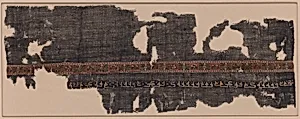
Medium
Wool, linen; plain weave, tapestry weave
Dimensions
Textile: L. 22 3/4 in. (57.8 cm) W. 12 1/2 in. (31.7 cm) Mount: H. 46 1/8 in. (117.2 cm) W. 32 in. (81.3 cm) D. 1 3/4 in. (4.4 cm)
Classification
Textiles-Woven
Department
Islamic Art
Museum
Metropolitan Museum of Art, New York, NY
Credit
Gift of George D. Pratt, 1931
Accession Number
31.19.13
Rights
Public Domain
Art Historical Context
This exquisite shawl, woven in the 9th–th century, showcases the refined textile traditions of early medieval Egypt. Crafted from wool and linen using both plain weave and intricate tapestry techniques, the piece features Coptic inscriptions that likely served decorative or protective purposes. Its modest size suggests it was a personal garment, valued for both warmth and symbolic meaning in daily life. The combination of materials and weaving methods highlights the skill of anonymous artisans who blended durability with artistic expression. Tapestry weave allowed for colorful, detailed patterns and text, making such textiles prized across regions. Now housed in the Metropolitan Museum’s Department of Islamic Art, this work reflects the cultural exchanges of its era, when Coptic Christian communities thrived under Islamic rule. Donated by George D. Pratt in 1931, the shawl offers visitors a tangible connection to centuries-old craftsmanship and the enduring appeal of woven art.