
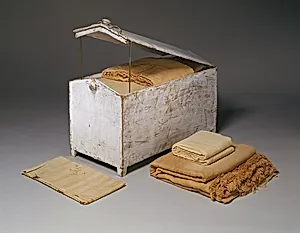
Sheet
Unknown Artist
ca. 1492–1473 B.C.
Medium
Linen, ink
Dimensions
L. 496 cm (195 1/4 in.); w. 154 cm (60 5/8 in.)
Classification
Sheet, inscribed, weavers marks, linen mark, fine spin, fine weave
Period
New Kingdom
Department
Egyptian Art
Museum
Metropolitan Museum of Art, New York, NY
Credit
Rogers Fund, 1936
Accession Number
36.3.101
Rights
Public Domain
Art Historical Context
This remarkable linen sheet, dating to the early New Kingdom's Dynasty 18 (ca. 1492–1473 B.C.), hails from a golden age of ancient Egypt when pharaohs like Thutm III expanded the empire and monumental art flourished. Measuring an impressive 496 cm long and 154 cm wide, it dwarfs modern bedsheets, hinting at its ceremonial or practical role in a society where linen—prized for its fineness from the Nile's flax—was a symbol of purity and elite status. Inked inscriptions, likely in hieroglyphs or hieratic script, adorn its surface, showcasing the Egyptians' mastery of waterproof carbon-based inks made from soot and gum arabic. As a rare survivor from over 3,500 years ago, this sheet offers a window into daily scribal practices or ritual texts during Dynasty 18, a period of artistic innovation blending realism and symbolism. Linen served not just for clothing or wrappings but as a flexible medium for recording history, spells, or administrative records—essential for the afterlife or bureaucracy. Acquired through the Rogers Fund in 1936, it now graces the Metropolitan Museum of Art's Egyptian collection, reminding us how everyday materials carried profound cultural weight in pharaonic Egypt.