
Sheet Fragment
Unknown Artist
4th century
Medium
Linen, wool
Dimensions
Overall: 25 9/16 × 39 3/8 in. (65 × 100 cm)
Classification
Textiles-Woven
Culture
Coptic
Department
Medieval Art
Museum
Metropolitan Museum of Art, New York, NY
Credit
Rogers Fund, 1933
Accession Number
33.10.3
Rights
Public Domain
Art Historical Context
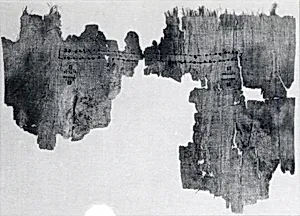
This exquisite *Sheet Fragment* from 4th-century Coptic Egypt offers a glimpse into the daily artistry of early Christian communities in the Nile Valley. Crafted from and wool, this woven textile measures an impressive 25 916 × 39 3/8 inches (65 × 100 cm), suggesting it was once part of larger bed sheet or garment. Acquired through the Rogers Fund in 1933, it now resides in the Metropolitan Museum Art's Medieval Art department, classified among textiles that highlight the sophistication of ancient weaving traditions. Coptic culture, emerging in Egypt around the 4th century with the spread of Christianity, produced some of the finest surviving textiles from antiquity, thanks to the region's arid climate preserving them in burials. These fabrics blended local Egyptian techniques with emerging Christian motifs, often featuring intricate patterns, animals, or symbolic designs woven in vibrant wools against a linen ground. The use of tapestry weaving here demonstrates advanced technical skill, where wool threads were inserted to create colorful, durable motifs without cutting the weft. As a rare survivor from this pivotal era, the fragment underscores the cultural fusion of pagan and Christian influences in everyday life, making it a treasured example of how textiles served both practical and spiritual purposes in Coptic society. Visitors can appreciate its tactile beauty and historical depth up close.