
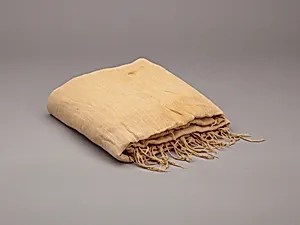
Sheet, linen mark, medium spin, medium weave
Unknown Artist
ca. 1492–1473 B.C.
Medium
Linen
Dimensions
L. 492 cm (193 11/16 in); w. 125 cm (49 3/16 in)
Classification
Linen sheet, mark
Period
New Kingdom
Department
Egyptian Art
Museum
Metropolitan Museum of Art, New York, NY
Credit
Rogers Fund, 1936
Accession Number
36.3.138
Rights
Public Domain
Art Historical Context
Step into the world of ancient Egypt with this remarkable linen sheet from the New's Dynasty 18, dating to around 1492–1473 B.C. Measuring an impressive 492 cm long and 125 cm wide—nearly 16 feet in length—this vast textile exemplifies the Egyptians' mastery of flax processing and weaving during a golden age of empire-building under pharaohs like Hatsheut and Thutmose. Likely used as bedding, a ceremonial shroud, or sailcloth, it reflects everyday luxury in a society where fine linens symbolized purity and status. Crafted from high-quality linen with a medium spin and medium weave, the sheet showcases advanced textile techniques honed over millennia. Egyptian linen was renowned worldwide for its lightweight breathability and durability, produced by women in state workshops or households. The "linen mark" denotes its standardized quality, a hallmark of New Kingdom production that ensured consistency for royal and elite use. This artifact highlights how textiles were not mere utilities but cultural cornerstones, integral to rituals, trade, and mummification. Acquired through the Rogers Fund in 1936, this piece at the Metropolitan Museum of Art transports us to the Nile Valley's ingenuity, reminding us of the artistry in the ancient ordinary.